








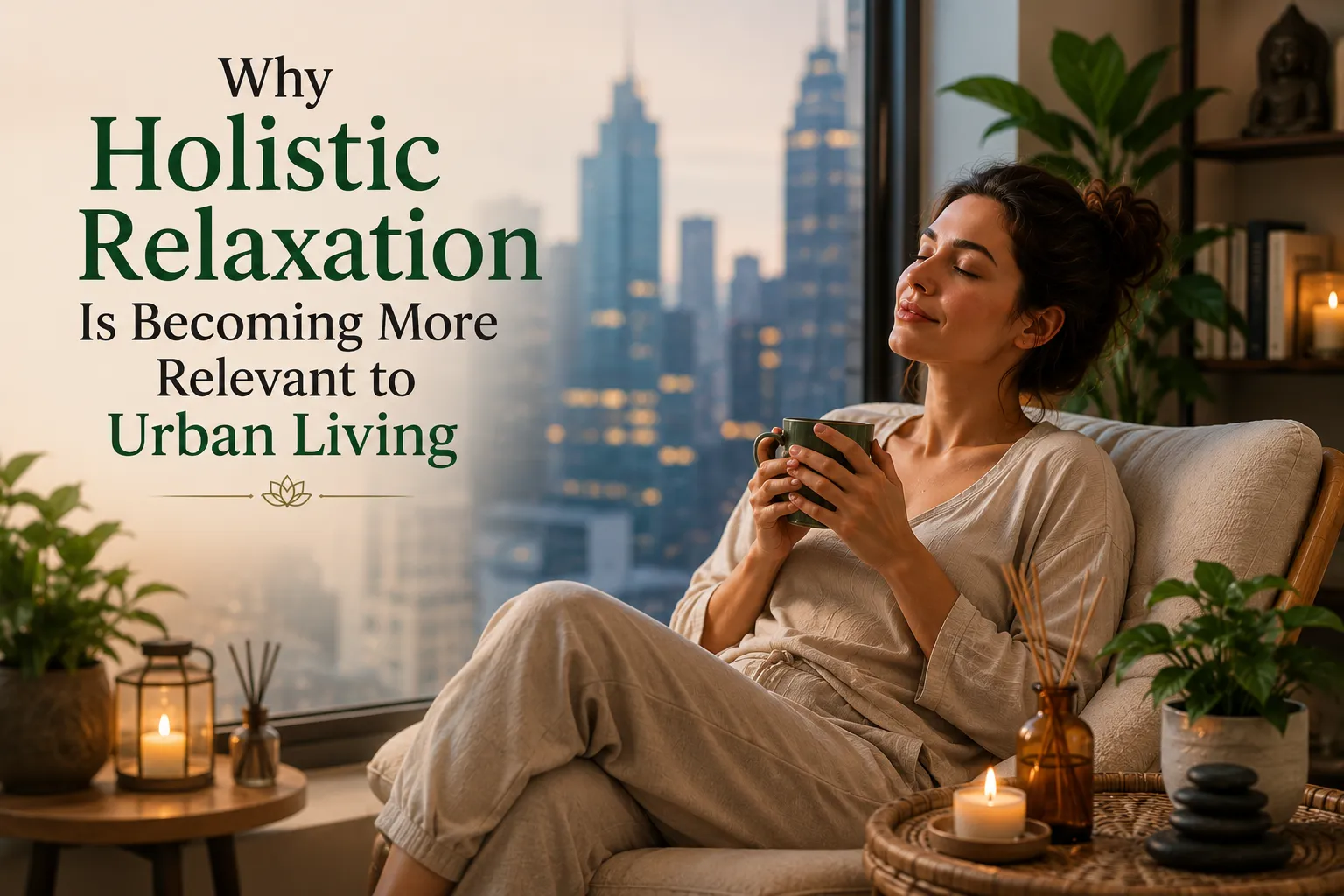
Holistic relaxation is becoming more relevant because city pressure rarely comes from one source. Commuting, noise, screen use, crowded spaces and limited personal time can overlap. A useful response combines small physical, mental, sensory and environmental changes that help a person move from constant input towards a calmer pace.
For people researching holistic relaxation in London, the important word is not “luxury” but “whole”. The approach recognises that rest is affected by what we notice, how we move, where we spend time and whether our routine leaves any room to pause. It does not promise to remove stress or treat a health condition. Instead, it provides a realistic framework for making recovery more deliberate within ordinary city life.
Urban Living Creates More Than One Kind of Tiredness
A demanding day in London may involve an early start, a crowded train, rapid decisions, background noise, several communication channels and an evening that begins with another journey. Someone working from home can face a different version of the same problem: professional tasks remain visible, digital contact continues and there is no commute to mark a clear ending.
The result is not always physical fatigue. A person may feel mentally occupied, socially depleted or overstimulated while unable to settle. One isolated technique may therefore feel insufficient. A quiet bath cannot close an unfinished work loop, just as clearing an inbox cannot make a noisy bedroom restful.
Holistic relaxation starts by asking a better question: which part of the day is still demanding attention? The answer might point towards movement, quiet, food, sleep preparation, time outdoors, a conversation, a digital boundary or professional support. Different needs call for different forms of care.
What Makes Relaxation “Holistic”?
The term can sound vague, but it becomes practical when divided into four connected areas.
Physical ease
This includes comfortable movement, rest, regular meals and awareness of how the body feels after sitting or commuting. It does not require an intense programme. A short walk, gentle mobility practice or change of posture may be more suitable after a tiring day.
Mental space
Mental relaxation involves reducing the number of unfinished thoughts competing for attention. Writing tomorrow’s first task, putting worries on paper or completing a brief mindfulness practice can create a clearer boundary around the day.
Sensory balance
Cities supply constant visual and auditory information. Lower lighting, quieter audio, fewer notifications or a calm room can reduce avoidable input. The objective is not perfect silence; it is a noticeable change from the intensity that came before.
Supportive surroundings
Environment includes the spaces, people and routines that influence how easy it is to pause. A nearby park, a screen-free corner, an agreed quiet period in a shared flat or a professionally managed relaxation setting can all play a part.
These areas overlap. A walk through a green space, for example, combines movement, a change of scenery and a temporary break from digital demands. The World Health Organization’s overview of urban green spaces notes that parks and residential greenery can support psychological relaxation, social connection and physical activity while also reducing exposure to some urban environmental hazards.
Why the Approach Fits London Now
Much traditional wellness advice assumes predictable evenings, spare rooms and uninterrupted time. That does not reflect many London households. People may share accommodation, work variable hours, care for family members or move between home, office and hotels. Even enjoyable social plans can leave little unstructured time.
A holistic approach is relevant because it can be scaled. It does not depend on a perfect routine or a retreat outside the city. It can work through small decisions distributed across the day.
It also separates recovery from performance. Turning relaxation into another achievement—complete with targets, expensive equipment and guilt when a session is missed—can add pressure. A more sustainable approach asks whether an action is accessible, appropriate and repeatable.
Use Three Scales of Urban Recovery
Instead of waiting until the end of an exhausting week, build opportunities to change pace at three scales.
The two-minute reset
A two-minute pause is not meant to solve a difficult day. Its value is that it interrupts automatic momentum.
You might:
- put both feet on the floor and notice where the chair supports you;
- look away from the screen and focus on a distant object;
- unclench the jaw and lower the shoulders without forcing them;
- take several comfortable, unhurried breaths;
- drink water without reading messages; or
- step outside before moving from one task to the next.
These resets fit between meetings, after leaving a station or before entering home. They are particularly useful as transitions because they require little planning.
The 20-minute decompression period
This is long enough to create a clearer contrast with work but short enough to fit into a busy evening. Choose one activity rather than stacking several together.
A 20-minute period could involve walking without taking a call, preparing and eating a simple snack, listening to music, having a shower, reading, stretching gently or sitting quietly. Put the phone out of reach if doing so is practical. The purpose is to stop feeding the same stream of stimulation.
The longer restorative session
Occasionally, more time may be useful. This could be a longer walk, a yoga class, unhurried time in nature, a creative activity, a quiet social plan or a professionally delivered wellness service. Longer sessions should complement everyday habits rather than carry the entire responsibility for wellbeing.
This model allows for imperfect weeks. If a longer plan is cancelled, the smaller layers remain. If two minutes feels insufficient, the 20-minute option offers more room.
Build Transitions Around the London Commute
The commute is often treated as lost time, yet it can become a boundary between roles. The aim is not to transform a crowded journey into a wellness retreat. It is to make the final part of the trip different from the working day.
Try ending work-related messages before you reach your stop. During the last few minutes, choose neutral audio or allow the journey to be quiet. Notice the temperature and pace when you leave the station. If possible, walk one short section rather than taking the quickest connection.
For home workers, create a substitute commute. Put work equipment away, change clothes and walk around the block. In a studio flat, even covering the laptop or moving the chair can change the visual meaning of the space.
Keep the transition simple. If it requires special clothing or favourable weather, it is unlikely to survive a typical London week.
Create a Low-Stimulation Corner at Home
A calmer environment does not require a large property. Choose one chair, side of a sofa or section of the bedroom and give it a specific purpose. Keep work materials away from it. Use a lamp rather than bright overhead lighting, and keep only one or two relaxing items nearby.
In shared accommodation, portability helps. Headphones, an eye mask, a folded blanket and a book can form a temporary relaxation kit. Agreeing on a short quiet period may be more realistic than expecting silence all evening.
The space should feel easy to use, not carefully staged. The real cue is consistency: returning to the same place for a lower-stimulation activity.
Make Mindfulness Concrete
Mindfulness is simply the practice of attending to present experience with less immediate judgement. It does not require an empty mind, and distraction does not mean failure.
The Guy’s and St Thomas’ NHS Foundation Trust mindfulness guidance describes body scanning as paying attention to sensations in different parts of the body. Its guidance also advises stopping an exercise and speaking with a doctor or trainer if it becomes painful or uncomfortable.
For a brief version, sit comfortably and notice contact with the floor or chair. Observe the natural breath without making it unusually deep. When the mind wanders, acknowledge the shift and return to a physical sensation. Two or three minutes is enough to begin.
Some people find stillness uncomfortable. Walking slowly, washing dishes with attention or listening closely to music may be a better entry point. A holistic routine should adapt to the person rather than insist on one supposedly universal technique.
Where Tantra Yoga Can Fit
Tantra Yoga is interpreted differently across traditions and modern schools. Depending on the teacher, a class may include posture, meditation, breathing, philosophy or attention to embodied awareness. It should not be assumed that every class uses the same practices.
Before attending, read the description and ask how the session is structured. Look for a teacher who communicates clearly, welcomes questions and allows participants to decline or modify an exercise. Avoid forcing postures or breath retention, and follow any relevant advice from a qualified healthcare professional.
For urban relaxation, a gentle class may provide movement, focused attention and a planned break from daily input. It is one possible component, not a guaranteed treatment or a replacement for medical or mental-health care.
Professional Relaxation as One Part of the Picture
Professional services can create protected time away from work and digital interruption. Massage and other body-based options may appeal to adults who value a dedicated setting. Suitability and experiences vary, so consider the provider and service format carefully.
Review current descriptions, prices, boundaries, privacy information, hygiene standards and cancellation terms before booking. Ask what the appointment includes, how consent and comfort are handled, and whether there are circumstances in which the service may be unsuitable. A professional provider should answer reasonable questions without pressure or medical promises.
Anyone searching for the most popular Tantric Massage parlour in London should treat that wording as a search query rather than proof of an independently verified ranking. Popularity does not establish professionalism, appropriateness or compatibility with personal preferences.
Adults who want to explore a discreet, appointment-based option can visit Tantric Massage London and review the current information before deciding whether to enquire.
A Practical Seven-Day Experiment
Holistic relaxation becomes easier to understand through observation. For one week, note when you feel most overloaded and what type of input is present.
Then test this simple structure:
- Use one two-minute reset during the working day.
- Create a clear end-of-work signal.
- Choose one 20-minute decompression activity on three evenings.
- Spend time in a green or quieter outdoor space once during the week.
- Review which actions were genuinely calming and which felt like obligations.
Do not score the week as a success or failure. Look for patterns. You may discover that noise matters more than workload, that a lunchtime walk is more useful than an elaborate evening plan, or that social connection is restorative when solitary activities are not.
Frequently Asked Questions
Does holistic relaxation require complementary therapy?
No. It can include ordinary actions such as walking, reducing notifications, eating without working, creating a quieter space or following a regular wind-down routine. Professional services are optional.
How much time should I set aside?
Start with what is repeatable. Two-minute pauses can support transitions, while 20 minutes allows a more noticeable change of pace. A longer session can be added when time and circumstances permit.
Can relaxation replace help for persistent stress or anxiety?
No. Self-care may support general wellbeing, but it is not a substitute for assessment or treatment. The NHS Every Mind Matters service provides practical wellbeing guidance. Speak with a GP or an appropriately qualified professional if stress, anxiety, low mood, sleep difficulties or physical symptoms persist or interfere with daily life.
What is the best relaxation method for city living?
There is no single best method. The most useful choice responds to the source of overload and fits the person’s health, preferences, home and schedule. A combination of small practices is often more realistic than relying on one perfect ritual.
Relaxation That Belongs in Real Life
The growing relevance of holistic relaxation is not evidence that Londoners need another trend to follow. It reflects a practical truth: urban demands arrive through the body, attention, senses, environment and schedule at the same time.
A workable response can be modest. Pause between roles, reduce unnecessary input, move comfortably, spend time in supportive surroundings and arrange longer restorative periods when appropriate. The objective is not permanent calm. It is to create regular moments in which the city is no longer setting the pace.