
The first time I truly understood the weight behind the question came not in some polished therapist’s office, but alone in a dimly lit hotel room in Pune, rain hammering the windows like impatient fingers. I had flown in for a project that demanded more of me than I had left to give. My mind spun with deadlines and half-finished conversations, my body felt like an afterthought I’d been dragging from meeting to meeting.
That night, instead of reaching for the usual distractions—another drink, scrolling until my eyes burned—I turned inward. Not out of grand intention, but simple necessity. What followed wasn’t just physical release. It was the quiet beginning of remembering that I existed as more than output.
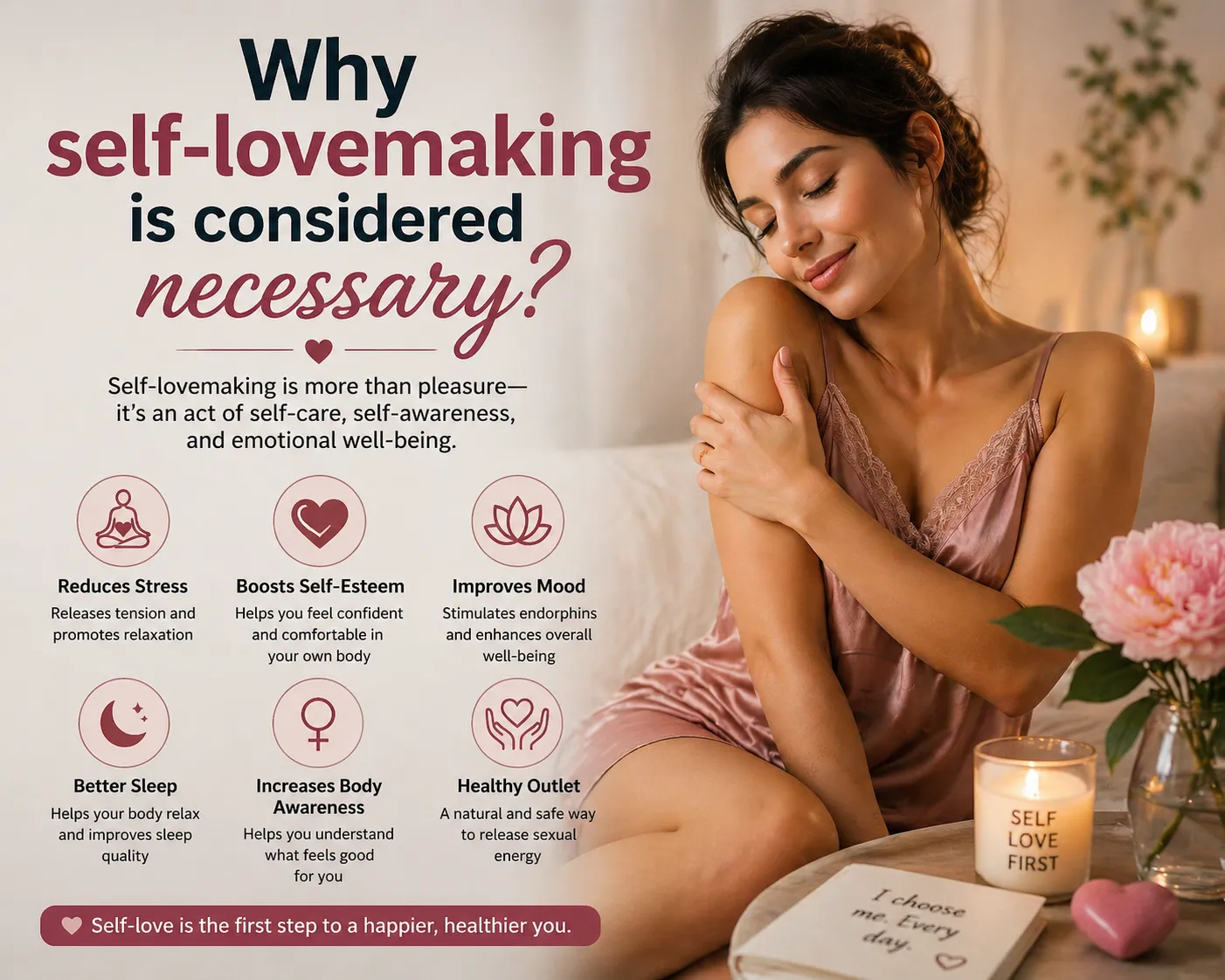
Self-lovemaking, that private act of turning attention fully toward one’s own body and its capacities for pleasure, carries a necessity that rarely gets spoken about plainly. It isn’t a substitute or a fallback. In certain moments, it becomes the most honest conversation you can have with yourself when the world outside has grown too loud or too indifferent.
I’ve carried this realization across different cities, different phases of life. In Bangalore, after weeks of back-to-back deliverables that left my nerves frayed, the pattern repeated. The hotel room felt anonymous, the city’s energy pressing in from beyond the curtains.
The Hidden Dialogue We Often Silence
Most of us learn early to treat our bodies as vessels that must perform—show up, deliver, endure. We feed them, exercise them when convenient, medicate them when they protest. But the language of pure sensation, the one spoken without words or witnesses, often gets sidelined as optional or even indulgent. Over time, that silence builds. Tension settles into shoulders and jawlines. Desire gets redirected into ambition or resentment. Sleep arrives shallow because the nervous system never quite receives permission to fully let go.
There’s a particular exhaustion that accumulates when we outsource all regulation of our inner states to external sources—partners, substances, work highs. Self-lovemaking interrupts that outsourcing. It reintroduces a direct channel: you to you. Not in a mechanical way, but through a kind of patient rediscovery.
The way your breath changes when attention lingers. How certain pressures or rhythms shift the quality of your thoughts from jagged to fluid. These aren’t trivial observations. They become data your system uses to recalibrate after days spent absorbing other people’s demands.
I remember one stretch in Kolkata where the monsoons mirrored my own internal weather—unsettled, heavy, unrelenting. Work had me moving between sites with little room for pause. Evenings blurred. One night, instead of collapsing into restless half-sleep, I allowed myself the space to engage slowly, attentively.
The act itself lasted longer than expected because I wasn’t rushing toward any finish line. What surprised me was the aftermath: not just the immediate easing of physical restlessness, but a subtle sharpening of mental clarity the next morning. As if some internal static had been tuned out.
When the Body Speaks in Its Own Tongue
There’s a physiological honesty to self-lovemaking that external encounters sometimes gloss over in the heat of mutual performance. Your body doesn’t need to impress or accommodate. It can hesitate, experiment, repeat, or change course without explanation. That freedom allows for a deeper listening. You notice how stress from a difficult week lodges in the lower back and how certain movements coax it loose. You learn the precise tempo that moves you from mental chatter into embodied presence.
In Delhi, during a particularly brutal summer that seemed to sap every reserve, I found myself relying on these private rituals more deliberately. The heat made everything feel heavier, including the effort of maintaining professional composure. What I discovered was that consistent, unhurried self-attention acted like a quiet anchor.
It didn’t erase the discomfort of the environment or the pressure of expectations, but it created an internal climate where I could still access satisfaction and release on my own terms. The nervous system, often left in a low hum of vigilance, received a clear signal: safety exists here, inside this skin, without needing anyone else to provide it.
The Quiet Rebellion Against Disconnection
Modern life fragments us in subtle ways. We split attention across screens, obligations, and carefully curated selves. Self-lovemaking pulls the fragments back toward a single point of focus. In that focus, something restorative happens. The brain, usually juggling predictions and judgments, narrows to sensation. The body, usually braced for the next demand, softens into its own rhythm. The gap between mind and flesh narrows.
I’ve spoken with friends—men and women navigating high-stakes careers in tech hubs or creative fields—who describe similar patterns. One colleague in Bangalore mentioned how, after months of travel and virtual meetings, he realized his sense of inhabiting his own body had grown faint.
Resuming a practice of intentional solo pleasure felt like plugging back into a power source he’d forgotten existed. Not dramatic. Just steady. Like remembering the difference between running on empty and running on reserves you actually own.
Navigating the Unspoken Stigma
Even now, the idea carries residual awkwardness for many. We’ve inherited layers of messaging that frame solo pleasure as childish, selfish, or a sign of lack. Yet the necessity persists precisely because those judgments ignore how central this practice can be to adult self-regulation. It isn’t regression. It’s reclamation—of time, of attention, of the right to feel good without earning it through productivity or partnership.
Traveling through different Indian cities has shown me how context shapes these private choices. Pune call girls and their clients often move in worlds where discretion and efficiency rule the day; yet many still carve out space for solo rituals that keep them grounded amid constant motion.
Similarly, Bangalore call girls navigate the demands of a city that never quite sleeps, where professionals frequently seek ways to maintain equilibrium between ambition and bodily needs.
In the east, Kolkata call girls operate against a backdrop of rich cultural layers and complex social expectations, making personal practices of self-attention even more vital for preserving inner autonomy. Further north, Delhi escorts encounter a capital that pulses with power and pressure; their world, like that of many high-functioning individuals, benefits from private anchors that no external arrangement can fully replicate.
Even when considering international parallels—such as independent Leeds escorts who balance personal lives with professional companionship—the thread remains consistent. Self-lovemaking serves as the baseline from which all other expressions of intimacy can draw strength. It prevents depletion. It maintains sensitivity. It keeps the self from becoming entirely defined by the gaze or needs of others.
A Practice Without Grand Declarations
There’s no universal manual for this. Some prefer slow exploration with varied textures and pressures. Others find rhythm and repetition more effective for quieting the mind. The common element seems to be intention without rigidity—showing up for yourself without turning the act into another task to optimize.
Over the years, I’ve noticed patterns in my own life. After intense periods of output, self-lovemaking acts like a reset valve. It discharges accumulated static. It reminds the system that pleasure isn’t always something to be chased externally but can be generated from within. Sleep often arrives more readily afterward, not because of exhaustion but because the body has completed a cycle it recognizes as complete.
Returning to the Rainy Night
That first night in Pune stayed with me because it marked a shift from viewing self-lovemaking as occasional relief to recognizing it as ongoing maintenance. Not glamorous. Not something I broadcast. Just necessary, like breathing with awareness or choosing real rest over performative busyness.
Years later, moving between cities and chapters, the understanding has only deepened. Whether in the humid press of Kolkata evenings, the buzzing ambition of Bangalore nights, or the layered intensity of Delhi, the private act remains a constant. It asks little but offers a return that compounds quietly: better regulation, sharper self-knowledge, a more generous presence when engaging with the world and its people.
That, perhaps, is the deepest reason it matters. Not as escape, but as return. Not as indulgence, but as the baseline from which a more balanced life becomes possible.