
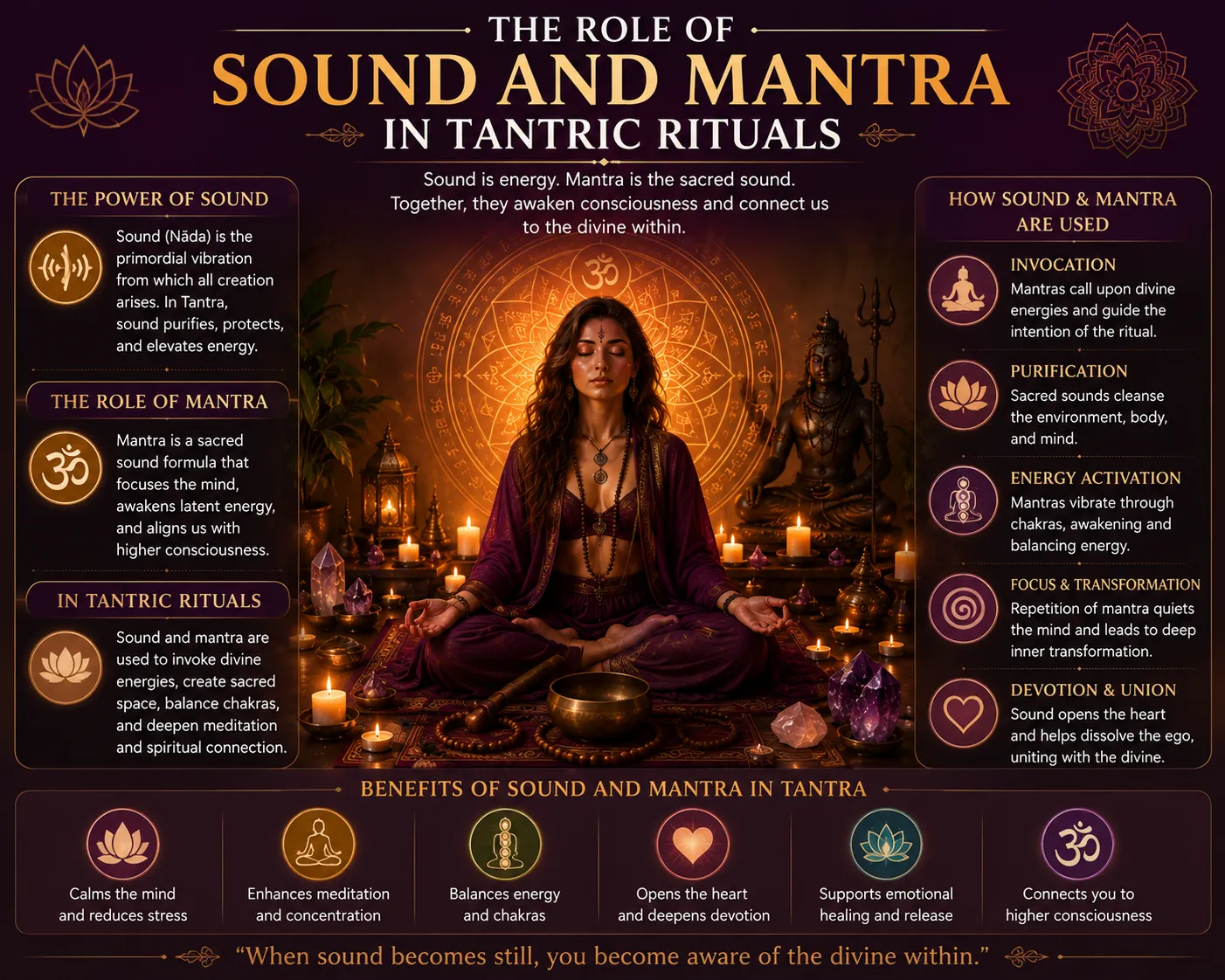
Sound plays an important role in many tantric traditions. A mantra, chant, hum, bell, or repeated tone can help focus the mind and settle the body. Rather than treating sound as decoration, Tantra uses it as a practice of attention. The voice becomes a bridge between breath, emotion, and awareness.
For beginners, mantra practice does not need to feel complicated. It can begin with one simple sound repeated slowly. The aim is not performance. The aim is to feel vibration, rhythm, breath, and presence.
Why sound changes the body
Sound is physical. A low hum vibrates in the chest. A long exhale softens the throat. A repeated tone gives the mind a steady anchor. When the mind follows sound, it has less space to wander into worry. The body begins to relax into rhythm.
This is why mantra often appears alongside breathwork, meditation, and tantra yoga for better health. The sound supports concentration while the breath supports nervous-system regulation.
Common sound practices
A simple hum can be practised alone for two minutes. Sit upright, inhale gently, and exhale with a soft humming sound. Notice the vibration in the face, throat, chest, or ribs. Another practice is repeating a short mantra silently with the breath. The word is less important than the steady attention it creates.
Some people practise call-and-response chanting with a teacher or group. Others prefer private mantra in the morning or before sleep. The right method is the one that feels safe, respectful, and sustainable.
Sound and intimate connection
For couples, sound can support emotional closeness. Partners may sit facing each other and breathe together before making a soft tone on the exhale. This shared rhythm can reduce awkwardness and build a sense of connection without needing many words.
People exploring erotic massage in London, the most popular tantric massage parlor in London, or the best tantric studio in London may also encounter sound, breath, or mantra as part of a wider relaxation setting. These tools work best when presented professionally, with consent and clear boundaries.
Creating a simple mantra ritual
Choose a quiet place. Sit comfortably. Light a candle if it helps you focus. Take three slow breaths. Hum softly for one minute. Then repeat a simple phrase such as “I am present” or “I return to calm.” Continue for five minutes. Afterward, sit in silence and notice the body.
Avoid forcing the voice. Keep the throat soft. If emotion appears, allow it gently. The purpose is not to create a dramatic experience but to deepen awareness.
Final thoughts
Sound and mantra bring the mind into rhythm with the body. Used with care, they can support calm, focus, emotional release, and deeper presence. The practice is simple, but its effect can be powerful when repeated consistently.